LV vs MV Switchgear: When to Choose Each in Industrial Settings
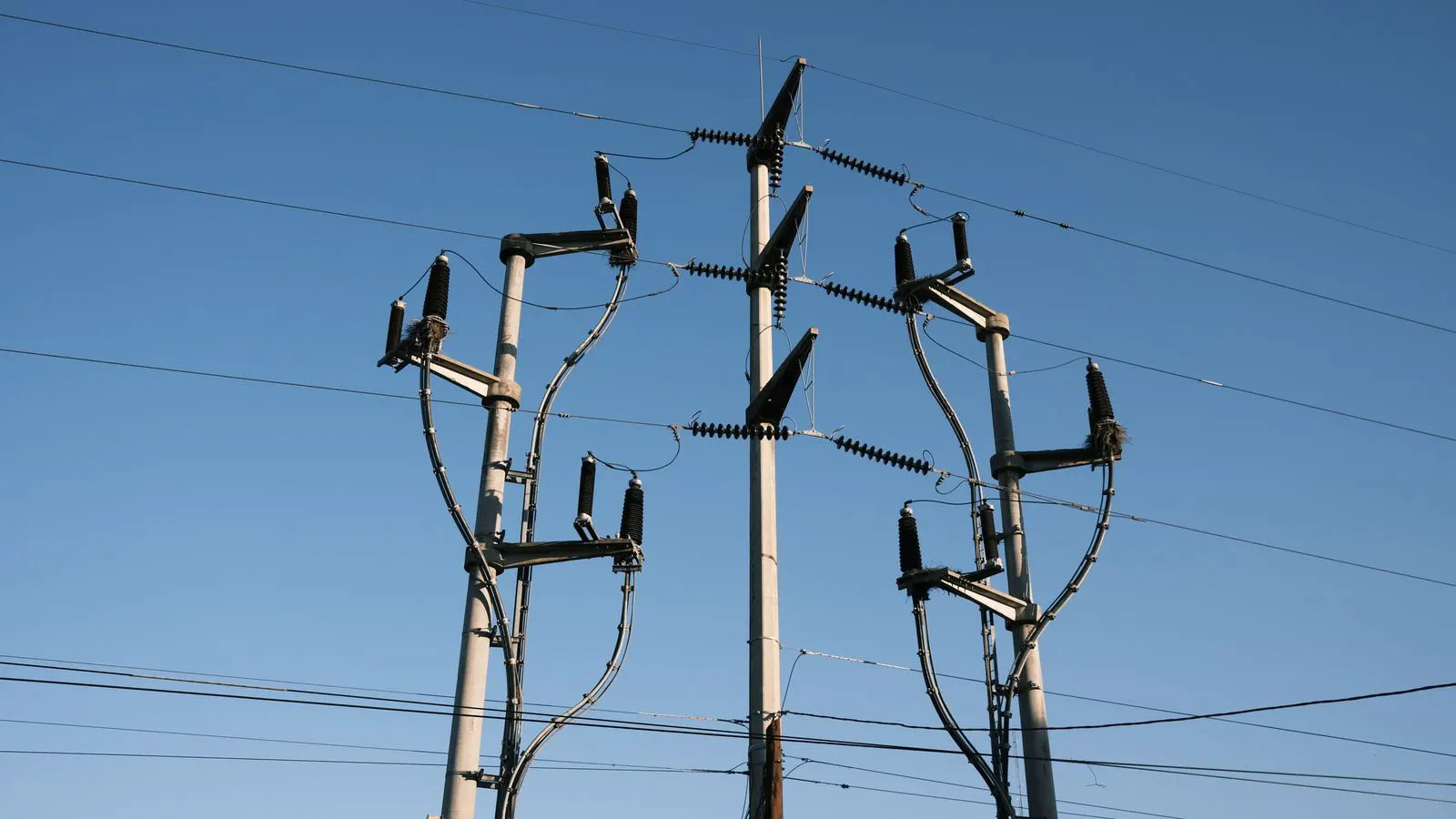
Use LV switchgear for most factory loads under 1 kV and MV for large transformers, motors, and long distribution runs. The choice depends on load size, voltage drop, fault current, and protection complexity.
- LV switchgear is the default choice for most industrial loads and simplifies protection coordination.
- MV switchgear is required when loads are too large for LV or when voltage drop becomes unacceptable over long runs.
- The selection decision must account for source fault current, protection device availability, and future load growth.
- A hybrid MV-LV system is the most common industrial architecture, with MV handling the backbone and LV feeding the loads.
Where the Voltage Level Decision Starts
The first question in an industrial power distribution design is not which brand of switchgear to buy. It is whether the load should be served from a low-voltage bus or a medium-voltage bus. That decision shapes the transformer rating, the cable sizing, the protection devices, and the cost of the entire distribution system.
In a typical plant, the utility delivers power at a medium-voltage level. A step-down transformer brings that voltage down to low-voltage levels for the machines, conveyors, lighting, and control panels on the floor. The switchgear architecture must be chosen so that each voltage level carries the correct load without excessive losses, excessive voltage drop, or protection complexity.
The boundary between low-voltage and medium-voltage is not a single fixed number. It varies by country and utility specification. In many regions, low-voltage covers up to 1 kV and medium-voltage covers from 1 kV up to about 35 kV or 60 kV. The practical design choice is usually between serving a load directly from LV or stepping it up to MV at the source.
How Load Size Drives the Choice
The single largest factor is the load itself. A single 400 kVA induction motor is a common LV load. A 400 kVA transformer feeding a large process area is also common. But a 4 MVA transformer, or a bank of motors totaling several megawatts, often pushes the design toward MV.
The reason is not just that the current is higher. It is that the copper loss in cables and busbars grows with the square of current. At LV levels, a large load produces very high current. The cable size needed to limit voltage drop and heating can become impractical. At MV levels, the same power at a higher voltage means lower current, smaller conductors, and lower losses.
Practically, if a single load or a group of loads exceeds roughly 500 kVA to 1 MVA, engineers often begin to evaluate MV service. If the total load is small, such as a compact assembly line or a small warehouse, LV service from a single transformer is sufficient and simpler.
Protection and Fault Current Considerations
Protection is where the difference between LV and MV becomes most visible. LV switchgear typically uses a combination of circuit breakers, fuses, and sometimes reclosing devices. The protection scheme is relatively straightforward because the fault levels are manageable and the protection devices are well understood.
MV switchgear requires a more layered approach. The fault current at the MV level can be very high, often in the tens of amperes to several thousand amperes depending on the source. The protection scheme must include MV circuit breakers, current transformers, and relay settings that coordinate with both the upstream utility protection and the downstream LV protection.
This coordination is not trivial. A fault on an LV feeder must not trip the MV breaker unnecessarily. A fault on an MV cable must not be missed by the LV protection. The design team must calculate fault currents at every point, select the right trip settings, and verify that the protection devices can interrupt the available fault current.
In many plants, the MV side is protected by a small number of highly reliable breakers. The LV side is protected by a large number of breakers or fuses. This asymmetry is by design. The MV protection is the backbone. The LV protection is the detailed layer.
A Practical Comparison Table
The following table compares the main options for serving industrial loads. The choice is rarely absolute. Most industrial plants use a mix.
| Option | Best for | Limitations |
|---|---|---|
| LV only | Small to medium plants, loads under 1 MVA, short distribution runs | High cable size for large loads, higher copper losses, more breakers needed |
| MV only | Large process loads, long distribution runs, high fault current at source | Higher protection complexity, higher MV cable and breaker cost, not suitable for small loads |
| MV-LV hybrid | Most industrial plants, mixed load sizes, large transformers | Requires careful coordination, more complex protection design, higher initial design cost |
| MV with LV subgroups | Plants with multiple isolated areas, different voltage requirements, or future expansion | Higher equipment count, more maintenance points, potential for coordination issues if poorly designed |
When MV Service is the Clear Choice
MV service is the clear choice when the load is large enough that LV cable sizing becomes impractical. Consider a chemical plant with a series of large compressors, pumps, and mixers. Each motor may be 500 kVA to 2 MVA. Serving all of these from a 400 V bus would require very large busbars and cables. The voltage drop over even a short run could exceed acceptable limits.
MV service also makes sense when the distribution run is long. If the plant is spread over several hectares, running LV cable from a central transformer to distant buildings is inefficient. Running MV cable along the main corridors and placing LV substations at each building or process area is more efficient.
There is another reason: future growth. If the plant is planned to expand, and the utility connection is already at MV, it is easier to add more MV feeders than to retrofit a larger LV transformer and busbar. The MV backbone scales better.
When LV Service Is Sufficient
LV service is sufficient for the majority of industrial applications. A machine shop, a packaging plant, a small electronics assembly line, a data center with a modest load, and a distribution center typically run on LV. The loads are distributed across many smaller circuits. The current per circuit is manageable. The protection is simple.
The economic case for LV is strong. LV switchgear is less expensive than MV switchgear. The cables are smaller. The protection devices are cheaper. The installation is simpler. There is no need to design a complex coordination study. The maintenance team is familiar with the equipment.
The practical rule of thumb is that if the total load is under 1 MVA and the distribution runs are short, LV is the default. If the load is larger, or the runs are long, evaluate MV.
The Most Common Industrial Architecture
The most common industrial architecture is a hybrid MV-LV system. The utility feeds the MV substation. A step-down transformer or a set of transformers brings the voltage down to LV. The MV bus serves large transformers and long runs. The LV bus serves the machines, panels, and local loads.
This architecture gives the engineer flexibility. The large loads are served at MV. The small loads are served at LV. The protection is coordinated between the two levels. The system scales as the plant grows.
The design team must pay close attention to the interface between MV and LV. The LV breaker must not trip on an MV fault. The MV breaker must not trip on an LV fault. The transformer must be sized correctly. The ground system must be designed to handle both LV and MV fault paths.
Common Design Mistakes to Avoid
The most common mistake is choosing the voltage level based on cost alone. A plant manager may see a cheaper LV switchgear quote and push the design toward LV. But if the load is too large, the cable size will increase, the voltage drop will be unacceptable, and the protection will be difficult to coordinate. The total cost may end up higher than an MV solution.
Another mistake is ignoring fault current. The design may look fine on paper, but the utility fault current may be higher than expected. The MV breaker may not be able to interrupt the fault. The LV breakers may be oversized. The protection settings may need to be changed.
A third mistake is underestimating the coordination study. The design team may select the breakers without doing a full coordination study. Then, during commissioning, the protection settings are found to be wrong. The system trips at the wrong level. The plant loses power. The cost of fixing the problem is high.
Final Selection Criteria
The selection of LV versus MV switchgear is not a single decision. It is a series of decisions. The first decision is the load size. The second is the distribution length. The third is the fault current. The fourth is the future growth plan. The fifth is the protection complexity.
A practical approach is to start with the load list. Group the loads by size and location. Identify the loads that are above the LV threshold. Identify the long runs. Identify the areas with high fault current. Then design the MV backbone around those points. The LV system feeds the rest.
The result is a system that is efficient, protectable, and scalable. The voltage level is chosen where it makes technical and economic sense. Not where the quote is lowest. Not where the equipment is most familiar. Where the design works.
Frequently asked questions
What is the typical voltage range for LV switchgear in industrial settings?
In most regions, LV switchgear covers up to 1 kV. The exact boundary depends on local utility specifications and national standards.
When does a single motor require MV service?
A single motor may require MV service when its rating is large enough that the LV cable size becomes impractical. Typically, motors above 500 kVA to 1 MVA are candidates for MV service.
How does fault current affect the LV versus MV decision?
Higher fault current at the source makes MV protection more complex. The design team must coordinate MV and LV protection to avoid false trips and ensure reliable fault clearing.
Can a plant use both LV and MV switchgear?
Yes. Most industrial plants use a hybrid MV-LV system. MV serves large loads and long runs. LV serves the local machines and panels.
What is the main economic driver for choosing MV over LV?
The main economic driver is load size and distribution length. For large loads or long runs, MV reduces cable size, copper losses, and overall system cost despite the higher equipment price.